The short version
- Storage cost is driven by volume, how long you need it, how often you want access, and what the insurance arrangement is. Not by the value of what you store.
- Containerised storage and self storage are different products. One is cheaper per unit of space, the other lets you walk in whenever you like.
- Most people overestimate the space they need by a room and pay for air.
- Access frequency is the single biggest lever you control. Storing sealed and untouched is materially different from storing with weekly visits.
- Minimum terms and notice periods catch people out far more often than the headline rate does.
Why storage turns up in a move at all
Most people who end up using storage did not plan to. It appears when the date you leave one property and the date you can occupy the next fail to line up, which happens more often than the property industry likes to admit.
In Scotland the usual cause is a date of entry that sits days or weeks away from the date you have to be out of your current home. Because the date of entry is fixed in concluded missives, it is not easily moved once agreed, and the gap has to be absorbed somewhere.
The other common triggers:
- A chain where your sale completes before your purchase
- Renovation work that has to happen in an empty property before you move in
- Downsizing, where the new property genuinely will not hold everything
- Moving abroad, where some belongings go and some stay
- A cross-border move where the two legal systems run to different timetables
The distinction that matters for cost is between storage you planned and storage you needed at three days’ notice. Planned storage is loaded once, efficiently, straight from the vehicle. Emergency storage usually means double handling, and double handling is where the money goes.
Containerised storage and self storage are not the same product
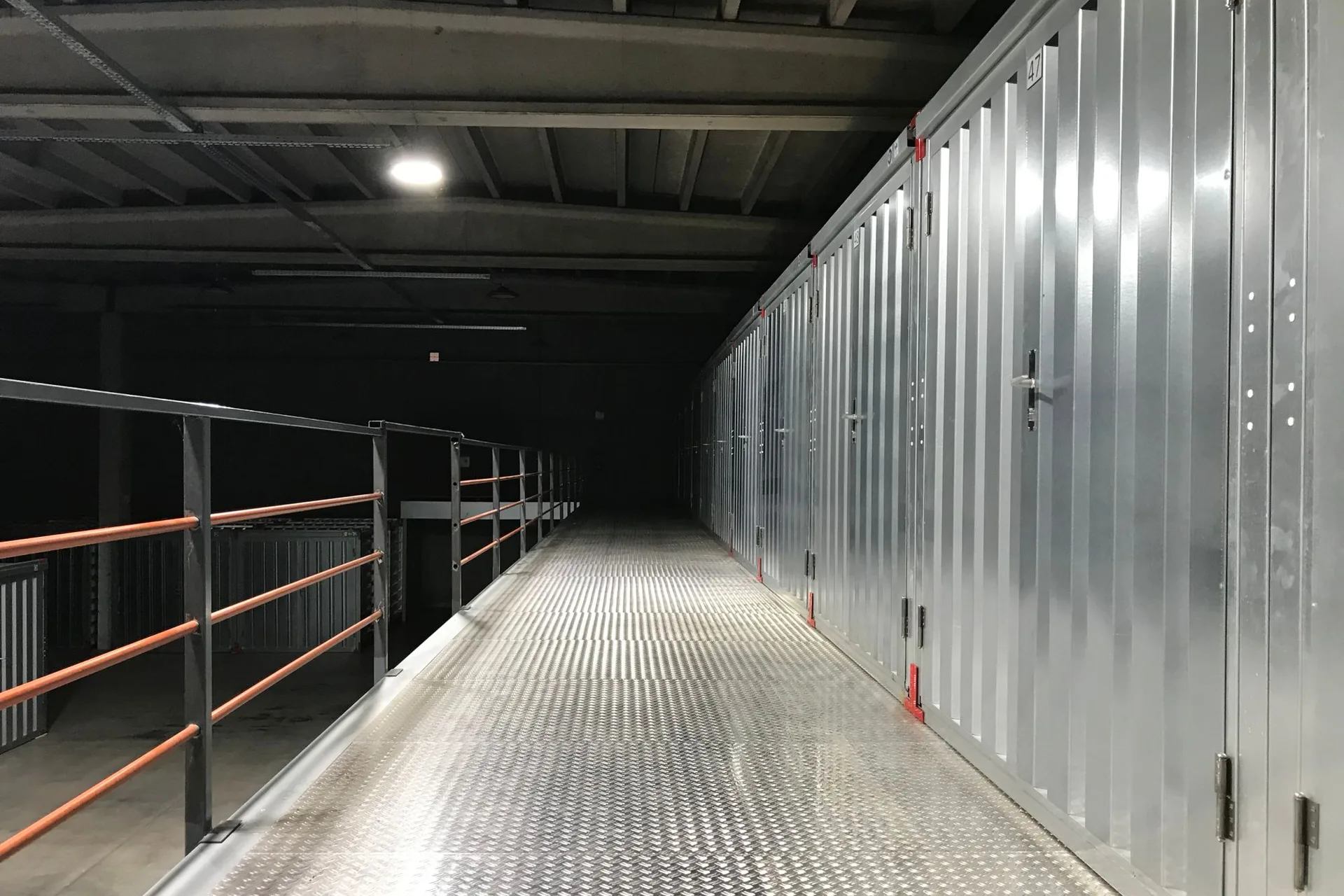
Containerised storage means your belongings are loaded into a wooden container at your property, sealed, and stacked in a warehouse. Self storage means you rent a unit in a building and have your own key. The first is more space-efficient, the second gives you access on demand.
| Consideration | Containerised storage | Self storage |
|---|---|---|
| Access | By appointment, usually with notice | Whenever the facility is open |
| Handling | Loaded once at your door | You load and unload the unit yourself |
| Space efficiency | Higher, containers stack | Lower, aisles and headroom are unusable |
| Best for | Whole household, sealed, medium to long term | Frequent access, gradual sorting, business stock |
| Main drawback | You cannot browse it | You pay for space you cannot fill |
The choice is not really about price. It is about whether you need to get at your belongings while they are stored. If the answer is no, containerised storage is the more efficient use of the money. If the answer is yes, or even maybe, the appointment requirement on containerised storage becomes an ongoing irritation.
Be honest with yourself about this before you decide. People routinely say they will not need access and then remember a document, a coat or a child’s school uniform in week two.

What actually determines the space you need
Volume is measured in cubic feet, not by room count, and the relationship between the two is looser than people assume. A sparsely furnished three bedroom house can take less space than a crowded one bedroom flat with a workshop’s worth of tools in the spare room.
The things that push volume up faster than expected:
- Soft furnishings. Sofas, mattresses and armchairs are mostly air but they cannot be compressed, and they are the bulkiest thing most households own.
- Anything that cannot be stacked on. A piano, a fish tank, a glass topped table or a bicycle occupies its footprint and wastes the space above it.
- Awkward shapes. Corner sofas, L-shaped desks and exercise equipment leave gaps around them that nothing else fits into.
- Garden and garage contents. Consistently the most underestimated category. Lawnmowers, tools, bikes and paint occupy real volume.
The things that take less than people fear are books, kitchenware and clothing, provided they are properly boxed. Loose, they sprawl. Boxed, they stack tightly and fill the gaps around furniture, which is exactly what you want them doing.
| Property | Typical storage requirement | What usually changes it |
|---|---|---|
| Studio or one bedroom flat | One small container or unit | A bike, a home gym, or hobby equipment |
| Two bedroom flat | One to two containers | Whether the second bedroom is furnished or used as an office |
| Three bedroom house | Two to three containers | Garage and garden contents |
| Four bedroom house | Three or more containers | Loft contents, which are almost always forgotten |
A survey is worth doing here rather than guessing, because the cost of getting it wrong is asymmetric. Booking too little space means an emergency second container and a second handling charge on the day. Booking too much means paying for empty air for the whole term.
Access frequency is the lever you actually control
How often you intend to visit changes which product suits you, and therefore what you pay. Storage that is sealed and left alone is the cheapest arrangement available. Storage you dip into weekly needs to be a unit you can walk into, which costs more per unit of space.
There is a middle option people miss. You can split the load: the bulk of the household goes into sealed containerised storage, and a much smaller unit or even a few boxes at a friend’s house holds the things you know you will want. That is often cheaper than sizing your entire household for accessibility you only need for a fraction of it.
If you do go containerised, ask two questions before you commit. How much notice does the facility need to bring your container down, and is there a charge for doing it. Both vary between operators and neither is usually volunteered.
Insurance, minimum terms and the parts nobody reads
Three contractual details affect what you actually end up paying, and none of them appears in a headline quote: whether insurance is included or added, what the minimum term is, and how much notice you must give to end the agreement.
Insurance. Your home contents policy may not cover goods in commercial storage, and where it does, the cover may be limited. Check with your insurer rather than assuming, and check whether the storage provider requires you to use theirs. You will usually need to declare a value for the goods, which means doing a rough inventory rather than a guess.
Minimum terms. Many providers have a minimum period. If your gap turns out to be shorter than you feared, you may still be committed. Ask what happens if you need the goods back sooner than planned.
Notice periods. Ending a storage agreement usually requires notice. If your new property completes suddenly, a notice period can mean paying beyond the point at which the unit is empty. Ask the length before you sign, not after.
What is not permitted. Every provider has a prohibited list. It generally covers anything flammable, perishable, living or illegal. Paint, gas canisters, petrol for the mower and garden chemicals are the ones that catch households out.
If your move and your storage are handled by the same firm, ask for it to be quoted as one job rather than two. Splitting them across providers means loading twice and paying for handling twice, which is the single most avoidable cost in the whole exercise. Our removals and storage page explains how the combined arrangement normally works.
Tell us the gap between your two dates and roughly what needs storing and we will come back with a written quote.
Get a quotePacking for storage is not packing for a move
Goods going into storage sit still for weeks or months, often through a temperature swing. That is a different problem from goods that spend four hours in a van, and it needs a different approach.
What changes:
- Nothing damp goes in. A slightly damp towel in a sealed box becomes mildew across everything it touches. Anything that has been outdoors, including garden furniture, needs to be dry.
- Use uniform boxes rather than whatever is to hand. Over months, an unevenly stacked column settles and crushes. Same size boxes stack square and stay square.
- Cover upholstery, but let it breathe. Sealed plastic against fabric traps moisture. Purpose-made covers exist for this reason.
- Dismantle what dismantles. Bed frames and table legs off recover a surprising amount of volume, which directly reduces what you pay for.
- Empty appliances and leave doors ajar. A sealed fridge or washing machine develops a smell that does not come out.
- Keep a numbered inventory. When you come to retrieve, the box you want is invariably at the back.
Label on the top and one side, because boxes get stacked and side labels disappear. The general principles are covered in our guide to packing for a house move, but for storage the emphasis shifts from speed to stability.
What should not go into storage at all
Some things are prohibited by the provider, and some things are simply a bad idea even where they are allowed.
Keep with you rather than storing:
- Passports, birth certificates, title deeds and anything you would struggle to replace
- Jewellery and small valuables, which are better with you or in a bank
- Medication, and anything with an expiry date
- Laptops and hard drives, both for security and because cold storage is unkind to batteries
- Anything you will need within the period, which is where the honest self-assessment comes in
Do not store at all:
- Food, including tins and anything sealed. It attracts pests and providers prohibit it.
- Flammables, gas canisters, petrol and paint
- Plants, which will not survive
- Anything damp, including garden furniture brought straight in from outside
When storage is the wrong answer
Storage solves a timing problem. It does not solve a volume problem, and using it to defer a decision is how people end up paying for years to keep things they will never use again.
Think carefully before storing if:
- You are downsizing and the new home genuinely will not fit the furniture. Storing it does not make it fit. Sell or donate before the move rather than paying to postpone the decision by a year.
- The gap is a single night. An overnight in a locked vehicle is usually simpler and cheaper than a full storage cycle.
- What you are storing is worth less than the storage. This is the uncomfortable one. Flat pack furniture in particular rarely justifies months of storage plus two handling charges.
- You have no end date. Open-ended storage has a way of continuing. Set a date at which you will review it, and put it in the calendar.
A good firm will tell you when storage is not worth it for you. If nobody has asked how long you need it or what is going in, you are being sold a unit rather than advised.
How to reduce what you pay without cutting corners
Storage cost is largely a function of volume and time, and both are more within your control than people assume. There are four levers worth pulling before you book anything at all.
Reduce the volume before it goes in, not after. The most expensive thing you can do is store a full household for three months and then discard a third of it on the way out. Sorting before storage is unwelcome work at an already busy moment, and it is the single largest saving available to most people.
Dismantle everything that dismantles. Bed frames, table legs, shelving units and wardrobe carcasses take dramatically less space in pieces than assembled. Keep the fixings in a labelled bag taped to the piece itself, because a dismantled bed with missing bolts is worse than no bed at all.
Load once. If your removals firm and your storage provider are the same operation, your belongings go from the property into the container and stay there until you want them. Split across two providers, the same goods are handled at least twice more, and handling is charged for every time it happens.
Be realistic about duration. A shorter term with a known end date is easier to price and easier to plan around than an open-ended arrangement that drifts. If you genuinely do not know how long you need, ask what the notice period is and build that into your thinking rather than discovering it later.
One thing not to economise on is the quality of the packing. Goods that sit for months settle, and a box that was adequate for a van journey may not be adequate for having three others stacked on it through a winter. Saving on cartons is a false economy in storage in a way it sometimes is not in a straight move.
Tell us the gap between your dates and roughly what needs storing and we will quote it as one job.
Get a quoteCommon questions about storage between moves
How do I know how much storage space I need?
A survey is the only reliable way, because volume depends on what you own rather than how many bedrooms you have. If you want a rough sense beforehand, the biggest variables are soft furnishings, garage and garden contents, and loft contents. Those three are where almost every underestimate comes from.
Is my home insurance valid for goods in storage?
Sometimes, but often with limits, and sometimes not at all. Check with your insurer directly rather than assuming, and ask the storage provider whether they require their own cover. You will usually need to declare a value, which means a rough inventory.
Can I get access to containerised storage?
Usually yes, by appointment and with notice. It is not the same as walking into a self storage unit, and there may be a charge for retrieving your container. Ask both the notice period and the charge before you commit, because these vary between operators.
What happens if my new date comes forward unexpectedly?
Ask about minimum terms before you sign. Many agreements have one, and a gap that turns out shorter than expected can still leave you committed. It is a reasonable question and any provider should give you a direct answer.
How do I get a price for storage as part of my move?
Send both addresses, roughly what needs storing, the gap between your dates and whether you will need access during the period through the quote form. Asking for the move and the storage together is worth doing, because loading straight from the vehicle avoids handling the same goods twice.
More guides are collected in our moving guides.