Packers and Movers in Glasgow, From the First Box to the Last
A professional packing service from a company that moves you as well. Full packs, part packs and fragile only, unpacking at the far end, and every box, roll and label brought to your door.
- Full, part or fragile only packing, whichever you actually need
- We pack and we move, so one team handles both ends
- Boxes, wrap and materials come with us
Start your free quote
No obligation. No middlemen. A real quote from our own Glasgow team.
What our Glasgow packing service covers
Packing is the part of a move people underestimate every single time. A three bedroom house is typically eighty to a hundred and twenty boxes, and the honest version of doing it yourself is three or four weekends of evenings, a lot of unsuitable carrier bags, and a kitchen still half full on the morning the van arrives.
Our packing service takes as much or as little of that off you as you want. We can pack the entire property the day before the move, do only the rooms people dread, or handle the fragile things and leave you the books and clothes. We bring the materials, we label everything to the room it is going to, and if you want it, we unpack at the other end and take the empty cartons away with us.
Worth being clear about one thing, because the phrase means different things to different people: when people search for packers and movers in Glasgow, most of them want a company that does both. We are a removals company first, so packing and moving are the same booking with the same coordinator rather than two suppliers who have never spoken. If it is the whole move you are after, our house removals page covers that side, and packing slots into it as an option.
If you only want the packing and someone else is doing the transport, that is fine too. We quote it either way.
Your packing options
Five ways to do this, and most people land somewhere in the middle rather than at either end. Tell us which rooms you are dreading and we will tell you which option makes sense.
Full pack
We pack the entire property, usually the day before the move. Every room, every cupboard, every drawer you have been ignoring. You wake up on moving day with nothing to do but keep the kettle out.
Part pack
We take the rooms that actually take time, normally the kitchen, the loft and the garage, and you handle the straightforward things like books, clothes and linen at your own pace.
Fragile only
The most popular choice. Glassware, china, artwork, mirrors and electronics get packed by people who do it daily, and everything robust stays with you.
Unpacking
At the far end we unpack into the rooms, flatten the cartons and take them away. It is the difference between living out of boxes for a fortnight and being properly moved in by the weekend.
Materials only
We drop off cartons, wrap, tape and labels a few days ahead and you do the packing yourself. The most hands on option for you, and it still means you are not hunting for boxes behind a supermarket.
Packing for storage
Packed and sealed to a storage standard rather than a transit one, for anything going into store between properties. Covers on upholstery, nothing perishable, and labelled by contents so things can be found months later.
What we pack, room by room
Different rooms fail in different ways, so they get packed differently. This is roughly how a full pack runs through a property.
Kitchen and glassware
The room that takes longest and the one most likely to arrive broken. Plates travel on edge rather than stacked flat, glasses go into cell dividers, and everything gets wrapped individually rather than nested together.
Bedrooms and wardrobes
Hanging clothes go straight from the rail into wardrobe cartons and straight back out at the far end, still on their hangers. Drawers, bedding and shoes are boxed by person rather than by item so unpacking is not a lucky dip.
Living room and electronics
Televisions, consoles, speakers and cables. Cables are bagged and labelled to the device they belong to, which is a ten second job that saves an hour of guessing later.
Home office and paperwork
Files, folders and documents boxed in order rather than swept into a carton. Passports, certificates and anything irreplaceable should stay with you rather than travel on the van.
Lofts, garages and sheds
The forgotten volume, and the single most common reason a quote turns out to be short. Tools, paint, camping gear, Christmas decorations and the things that went up there in 2014.
Kids rooms and toys
Boxed so that the things that matter most can be found first. One clearly marked box of favourites that travels with you rather than on the van makes the first night in a new house considerably easier.
Fragile and specialist items
Almost all packing damage happens to a small number of predictable things. These are the ones worth doing properly, and the reason most people who book us book fragile only.
China, crystal and glassware
Wrapped piece by piece in tissue and paper rather than bundled, then packed into cell dividers so nothing touches anything else. Plates stand on edge because a stacked plate takes the full weight of the ones above it.
Mirrors and artwork
Corner protection, a wrap layer and a flat carton sized to the piece. Framed work travels upright, never laid flat with things on top of it, and glazed pieces get taped across the glass so a break stays contained.
Televisions and monitors
Original boxes if you still have them, purpose made cartons if not. Screens travel upright and are never packed face down against anything.
Musical instruments
Cased instruments in their cases, uncased ones wrapped and boxed to fit. Anything large or valuable enough to worry you is worth flagging when you book so it is planned rather than improvised.
Lamps and shades
Shades pack separately from bases and never inside a box with anything that can press against them. It sounds fussy until you have unpacked a crushed shade.
Collections and antiques
Records, ceramics, glass cabinets, anything with sentimental or real value. Tell us what it is at quoting stage so the right materials come with us and it is not being solved on the day.
Furniture itself is a different job. Blanket wrapping, dismantling and getting bulky pieces through doorways is covered on our furniture removals page.
The materials we use
Materials are part of the service rather than an afterthought you have to source yourself. Whichever option you choose, what arrives is what the job actually needs.
Double walled cartons
Standard and large, both rated for the weight people actually put in them. Supermarket boxes are single walled, already stressed and the reason box bottoms fail on stairs.
Wardrobe cartons
A hanging rail inside a tall carton. Clothes go in on their hangers and come out on their hangers, which removes an entire afternoon of ironing at the far end.
Tissue, paper and bubble wrap
Tissue and paper for wrapping individual pieces, bubble for cushioning around them. Newspaper is free and it transfers ink onto everything it touches.
Mattress and sofa covers
Covers rather than a sheet thrown over. They keep dust, damp and close walls off things that are difficult to clean and expensive to replace.
Tape, markers and labels
Proper packing tape rather than parcel tape, and labels that survive being handled. A box that cannot be read has to be opened to be sorted.

Labelling is what makes unpacking survivable
The packing itself is only half of it. What decides whether the first week in a new house is manageable or miserable is whether anybody can find anything.
Every carton is labelled with the room it is going to and a short description of what is in it, written on the top and on at least one side, because a box stacked three high shows you its side and not its lid. Rooms are labelled against the new property rather than the old one, so a box from your current spare room lands in whichever room it is actually going to be used in.
Where a move needs it, we run a numbered inventory alongside the labels. That matters most on larger moves, on anything going into storage between properties, and on business moves where somebody has to account for what left the building. It is also what makes a claim straightforward in the rare case one is needed.
The practical result is that the crew unloading knows where every box goes without asking you, and you are not opening fourteen cartons on a Tuesday night looking for the kettle.
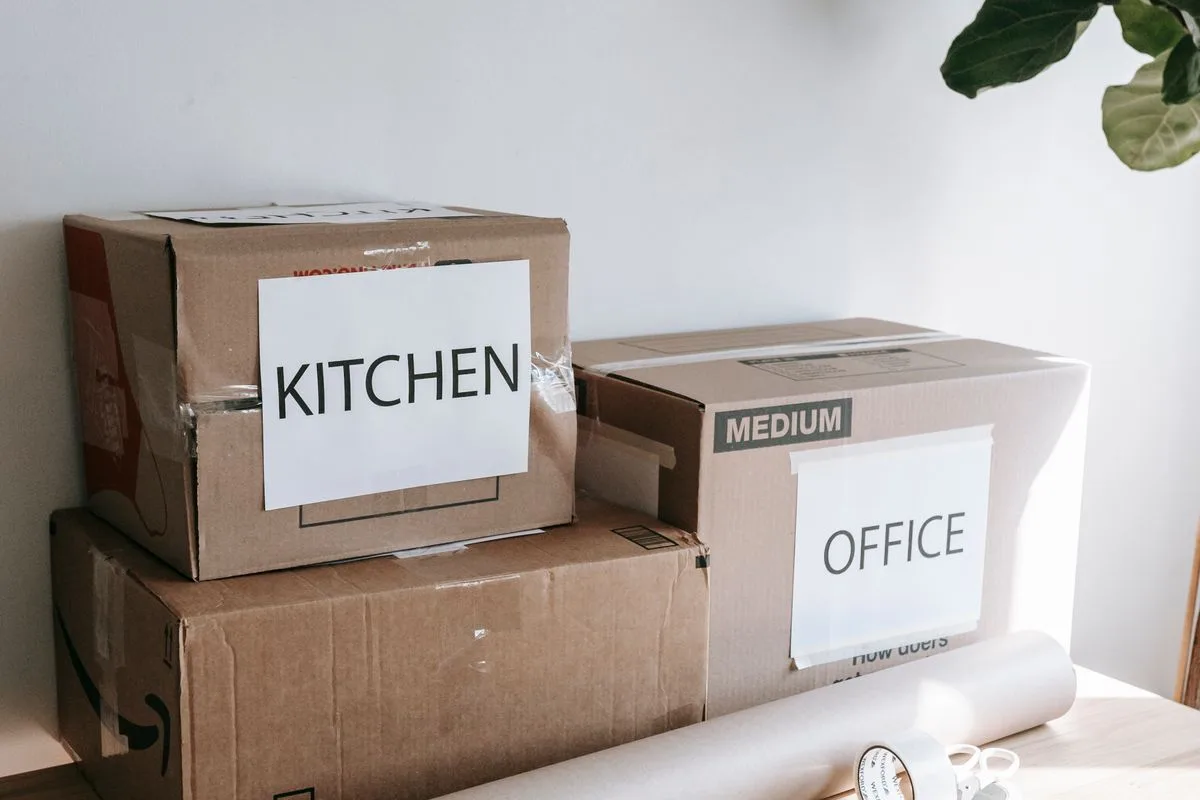
- Labelled by destination room, not origin room
- Written on the top and at least one side
- Contents noted, not just a room name
- Fragile cartons marked and loaded accordingly
- Numbered inventory where the move needs one
- Essentials box kept aside rather than loaded
When the packing actually happens
Packing is scheduled around the move rather than squeezed into it. Roughly how the timeline runs:
Fragile only, a few days ahead
Glassware, china and artwork can be packed well before the move because you are unlikely to need them in the meantime. Doing this early takes the worst of the work out of the last forty eight hours.
Full pack, usually the day before
A full property pack is normally a full day for a team, and it runs the day before the van arrives. You keep out what you need for one night and everything else goes into cartons.
Large properties, two days
Four bedrooms and up, or a house with a full loft and garage, often runs across two days. We would rather tell you that at quoting stage than have a team still packing at eight on moving morning.
Unpacking, on the day or after
Unpacking can happen as the van is emptied or as a separate visit a day or two later once you have decided where things are going. Both work, and the second is often calmer.
Whichever option you take, keep an essentials box with you rather than on the van: kettle, mugs, chargers, medication, toilet roll, bedding and a change of clothes. We will set it aside rather than pack it if you point it out.
Business and office packing
Commercial packing works differently from domestic packing, mostly because of crates. Businesses use stackable plastic crates rather than cardboard cartons: they pack faster, they stack safely on trolleys so a lift run carries more, and they are delivered ahead of the move so staff can pack their own desks around their work.
How commercial packing differs
- Crates delivered ahead so staff pack their own desks
- Crates numbered to positions on a new floor plan
- IT and equipment packed in purpose made packaging
- Sealed, numbered crates for confidential files
- Packing scheduled around trading hours
Where it fits with a business move
Packing is rarely booked on its own by a business. It usually forms part of a wider job, and it is quoted as one project rather than separately. Desk based moves with workstations and IT are covered on our office relocation page. Retail units, warehouses, kitchens, clinics and industrial premises are covered under commercial and business removals, where stock and fixtures matter more than desks.
Packing for storage
Anything going into storage rather than straight into a new property wants packing to a different standard, because it has to survive months rather than a single journey. In short: everything goes in clean and dry, upholstery and mattresses go under covers, no food or anything perishable goes anywhere near a carton, and boxes get labelled by contents as well as by room so you can find the winter coats in eight months without opening everything.
Our removals and storage page goes through preparing belongings for storage properly, including the things that catch people out. If your move involves a gap between properties, read that alongside this page.
What to tell us when you ask
The more accurate the information, the more accurate the answer. None of this takes long to put together and it is the difference between a firm booking and a rough guess.
The property size and number of rooms
A two bed flat and a four bed house with a loft are different jobs by a wide margin. Room count is the starting point, and it is the single thing that shapes how long packing takes.
How much is already packed
Some people ask a fortnight out with nothing touched, others are half done and stuck on the kitchen. Both are fine, we just size the job differently.
Which rooms you want us to do
Full property, the hard rooms only, or fragile items across the house. If you are not sure, tell us which rooms you are dreading and we will make a recommendation.
Anything fragile or specialist
China, crystal, artwork, instruments, collections, anything glazed or irreplaceable. Flagging it means the right materials arrive with the team rather than being improvised.
Lofts, garages, sheds and outbuildings
The most commonly forgotten volume on any packing quote, and the one that turns a one day pack into a day and a half. Mention them even if they are half empty.
Access and dates
Floor level, stairs, lifts and parking at the property being packed, plus your moving date and how firm it is. Packing has to sit in the right place in that week.
If you are unsure about any of it, send what you have. We would rather ask two follow up questions than turn up with a team sized for the wrong job.
Want the packing taken off your hands?
Tell us the property size, which rooms you want covered and your moving date. We will come back within one working day, and we can quote the move alongside it if you need both.
How many boxes will I need?
The question everybody asks, and the one nobody answers straight. These are realistic working ranges by property size, based on a standard mix of large and small cartons. Treat them as a starting point rather than a promise, because two identical houses can differ by forty cartons.
Studio or one bed flat
Mostly clothes, kitchen and books. A studio with built in storage can come in under twenty five; a one bed with a well stocked kitchen will push past forty.
Two bed flat or house
The most common range we pack. Two bedrooms, a real kitchen and a living room with books and media. Add a spare room used for storage and it moves toward the top of the range.
Three bed house
A family home with a loft, a garage or both. Kids rooms add volume quickly, and the loft is almost always underestimated by whoever is doing the estimating.
Four bed and larger
At this size the count depends far more on how long you have lived there than on the number of bedrooms. Twenty years in the same house is a very different pack from three.
What shifts the number
Books and records
The heaviest and most box hungry thing most people own. A serious book collection can add twenty cartons on its own, and it all has to go in small boxes.
Kitchens
A cook with proper equipment packs into two or three times the volume of a kitchen that mostly orders in. Glassware and china are the slow part as well as the bulky part.
Children
Toys, clothes that are outgrown but kept, school things and equipment. A three bed house with two children packs closer to a four bed without.
Lofts, garages and sheds
Consistently the biggest single reason an estimate falls short. If it is full, add twenty to thirty cartons to whatever number you first thought of.
How long you have lived there
Time is the real multiplier. The same house packs into far more boxes after fifteen years than after three, regardless of size.
Whether you are decluttering first
The one factor that moves the number down. Anything you deal with before the pack is a carton you do not fill, carry, store or unpack.
If you are packing yourself, order more than you think and fewer large boxes than you expect to need. Unused cartons are easy to deal with; running out at nine on a Sunday night is not.
Packing tips if you are doing it yourself
Plenty of people pack their own move and do it perfectly well. This is what we would tell you over the phone, and it holds whether you book us or not.
Heavy things go in small boxes
Books, tools, tins and records into small cartons; duvets, cushions and lampshades into large ones. The instinct is to fill the big box first, and a big box of books is both unliftable and likely to fail at the bottom.
Plates on edge, never stacked flat
Stand plates vertically like records in a rack, wrapped individually. A flat stack puts the weight of every plate onto the one at the bottom, which is why that is the one that breaks.
Fill the gaps
Empty space is what lets things move, and movement is what breaks them. Pack to the top and fill voids with paper, tea towels or soft items until nothing shifts when you tilt the box.
Do not over-fill either
A carton that will not close flat cannot be stacked, and anything that cannot be stacked either travels badly or takes up twice the space it should. The lid should shut without force.
Label the top and one side
Boxes get stacked, and a stacked box only shows you its side. Write the destination room and a short description on both, in something that will not rub off.
Wrap the handles too
Teapot spouts, jug handles, mug handles and anything that sticks out. Protrusions break first because they take the impact before the body of the item does.
Tape the base properly
Two strips along the seam and one across each end. Most box failures happen at the bottom seam, usually while somebody is carrying it down a stair.
Pack one room at a time
Finish a room before starting the next, and never mix rooms in one carton. A box of assorted things from four rooms has no correct destination and will be opened last.
Why people hand the packing over
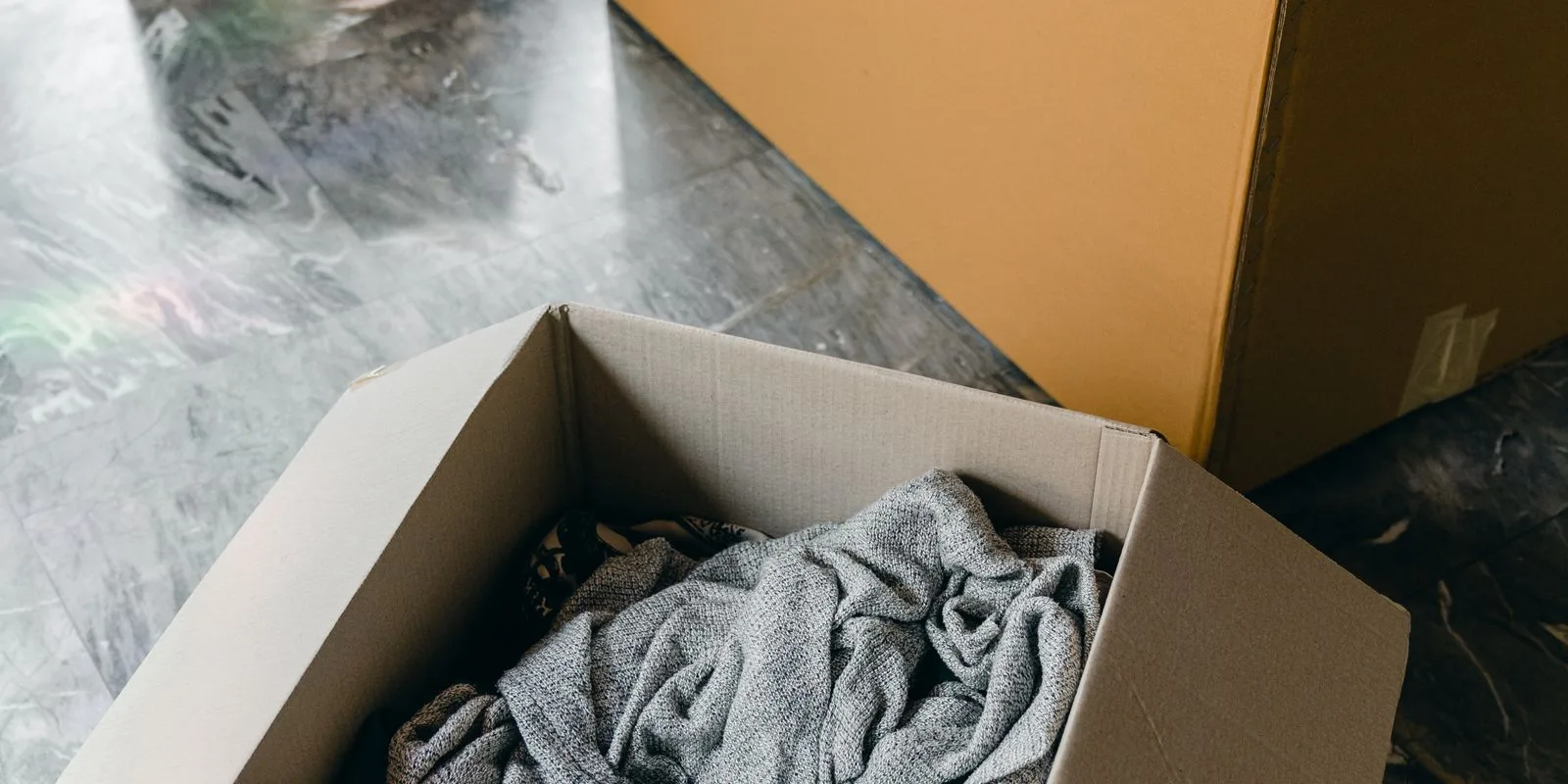
The strongest argument is time. A team that packs houses daily will do a three bedroom property in a day. The same house done in evenings and weekends around a job takes most people three or four weekends, and the last of it always ends up rushed into bin bags at eleven at night before the van comes.
The second is that the rooms people put off are exactly the rooms where damage happens. Kitchens and anything glazed account for most breakages in a move, and they are also the slowest to do properly. Handing over just those two things changes the whole shape of the week.
The third is simply that it is one less thing. Moving house is already an administrative event with solicitors, utilities, schools and dates that move. Removing the single largest physical task from that list is usually worth more than people expect when they are weighing it up.
One thing worth checking on any removals quote, ours included: ask how packing affects the cover on your belongings, since companies handle owner packed and professionally packed items differently. It is a fair question and any decent firm will answer it plainly.
Where we pack across Glasgow
Across the whole city and the towns around it. Packing teams work from the same base as our moving crews, so where we move we pack, and the two are scheduled together rather than separately.

- West End & Partick
- Hyndland & Broomhill
- Finnieston & Yorkhill
- Southside & Shawlands
- Pollokshields & Strathbungo
- Giffnock & Newton Mearns
- City Centre & Merchant City
- Dennistoun & East End
- Bearsden & Milngavie
- Cambuslang & Rutherglen
- Paisley & Renfrew
- East Kilbride, Hamilton & Clydebank
Packing also travels with a move out of the city. If you are leaving Glasgow, we pack here and unpack at the other end rather than handing you over to somebody else at the boundary.
What customers say about the packing
“We booked the fragile pack for the kitchen and I am very glad we did. Not one glass broken, and the boxes were labelled so well we found the coffee things in about a minute.”
Hannah L.
Fragile pack, West End
“Full pack the day before, moved the next morning, unpacked by the Friday. Doing it ourselves would have swallowed a month of evenings.”
Graeme W.
Full pack and move, Bearsden
“They packed the loft and the garage, which is the bit I had been avoiding for weeks. Turned up with the right boxes and just got on with it.”
Priya N.
Part pack, Shawlands
Packing questions, answered
Both. Searching for packers and movers in Glasgow tends to turn up firms that do one or the other, and we do both, so most people book them together on one quote with one coordinator. If you only want the packing and somebody else is handling the transport, that is fine and we will quote it on its own.
Yes, and it is one of the most common bookings we take. The kitchen is the slowest room and the one where most breakages happen, so packing it alone often makes the biggest difference for the least outlay of your time.
A one or two bed flat is usually a half day to a day. A three bed house is generally a full day for a team. Four bedrooms and up, or a house with a busy loft and garage, can run into a second day. We would rather schedule two days than have people still packing on moving morning.
Yes. Cartons, wardrobe cartons, tissue, wrap, tape and labels come with the service. If you want to pack yourself, we can drop materials off a few days beforehand so you are not chasing boxes around supermarkets.
If you want us to. Unpacking can happen as the van is emptied or as a separate visit a day or two later, and we flatten and take away the empty cartons either way.
Hazardous items such as petrol, gas bottles, paint, thinners and aerosols, along with perishable food. Passports, cash, jewellery and irreplaceable documents are better kept with you rather than boxed. If you are unsure about something, ask when you book.
Two to three weeks is comfortable, and four is safer if your move is on a Friday, a month end or in the school holidays, since those fill first. Fragile only packs are easier to fit in at shorter notice than full property packs.
Yes, where we have done the unpacking. If you packed yourself and used our materials, tell us and we will collect the empties rather than leaving you with a hallway full of flattened cardboard.
Related services
Packing is almost always booked alongside one of these. Where yours is, it goes on a single quote rather than as separate bookings.
Whole home moves across Glasgow, surveyed and run as one planned job with a crew sized to finish inside a day.
Move and store on one booking, for the gap between one property and the next.
Single items and part loads, where the care goes into the piece rather than the whole property.

A van and one or two crew for smaller jobs, single rooms and everything short of a whole home.

Desk based office moves with IT, phased departments and the work scheduled around your trading hours.

Moving abroad from Glasgow. Export packing, the customs inventory and shipping, planned end to end.
Get a free packing service quote
Tell us the property size, which rooms you want packed and your moving date. We will come back within one working day, and we can quote the move alongside the packing if you need both. If you would rather talk it through first, call 0141 000 0000 or use our contact page.
Start your free quote
No obligation. No middlemen. A real quote from our own Glasgow team.