International Removals from Glasgow, Planned End to End
Moving abroad is not one long journey, it is a sequence: survey, export packing, an itemised inventory, documentation, freight, customs at the far end and delivery into your new home. We plan that sequence with you rather than handing you a shipping date and hoping.
- Surveyed properly before anything is committed to
- Export packed and itemised for customs, not just boxed
- One point of contact from your Glasgow door onward
Start your free quote
No obligation. No middlemen. A real quote from our own Glasgow team.
What our overseas removals service covers
An international move differs from a domestic one in kind rather than in scale. A house move within Scotland is a single operation with one company doing everything between two front doors. An overseas move is a chain: your belongings are packed to a different standard, listed item by item for customs, handed into a freight system, cleared at the far end and then delivered by people in the arrival country.
That chain is why the paperwork matters as much as the packing, and why lead times are longer. It is also why the honest way to describe this service is as a managed process rather than a van journey. The work we do is at the Glasgow end and in coordinating what happens after it: assessing volume, packing for sea or air transit, building the inventory the customs authority will read, and keeping the schedule joined up so nothing sits waiting on a document nobody chased.
If your move turns out to be domestic after all, our house removals service is the simpler and quicker route, and we will say so rather than quoting you the complicated way round.
Where people move to
These are the destinations that come up most often from Glasgow. The notes below are about what tends to shape a move to each place rather than any claim about routes or schedules, which vary constantly and should be confirmed for your specific move.
Australia and New Zealand
Among the most common long-haul destinations from Scotland, and among the longest transits. Both countries apply strict biosecurity checks on arrival, so anything with soil, plant material or food residue is a genuine problem rather than a technicality.
Canada and the USA
Frequent destinations for work and family moves. Documentation requirements differ between the two and between provinces or states, so the destination address matters as much as the country.
Ireland
The shortest international move most Glasgow households make, and usually by road rather than sea. Simpler logistically than anywhere else on this list.
Spain and Portugal
Popular for retirement and lifestyle moves. Road freight through Europe is common, and rules for household goods changed for all EU destinations after Brexit.
France
Straightforward by road, and often chosen by people moving with more furniture than they would ship long haul because road freight makes volume less punishing.
Germany and the Netherlands
Common for work relocations. Well served by road freight, and generally among the more predictable European destinations to plan around.
UAE and the Gulf
Usually work driven and often to a fixed start date, which tends to make the schedule the binding constraint rather than the volume.
Further afield
Asia, Africa, South America and elsewhere. These are quoted individually because requirements and routes vary enormously by country.
How an international move works, step by step
This is the standard sequence for a household shipment. It is worth understanding whoever you end up booking, because it tells you which questions to ask.
Survey and volume assessment
Everything in an overseas move is driven by volume, so it is established first, in person or by video. Volume decides the shipping method, the method decides the schedule, and the schedule decides everything else. This is also where anything unusual gets identified.
Quote and shipping method
You get a written quote setting out the recommended method and what is included at each end. This is the point to decide between sole use and shared container, or between sea and air, because it changes both the timeline and how the rest of the plan is built.
Export packing
Packed to a different standard from a domestic move, because the consignment will be handled repeatedly, may sit in a yard, and will cross climate zones. Every carton is packed with that journey in mind rather than a single van trip.
The itemised inventory
As packing proceeds, each carton is numbered and its contents listed. This inventory is the document customs works from at the destination, and it is the single most important piece of paper in the whole move.
Documentation
The paperwork is assembled: inventory, identification and residence or visa evidence, and whatever the destination country requires for household goods. Requirements differ by country and change, so this is checked against current rules rather than assumed.
Collection from your Glasgow home
The consignment leaves your property and enters the freight chain. From here it moves as freight rather than as a removals load, which is the part people find least familiar.
Freight and customs at destination
Sea, air or road, then clearance on arrival. Clearance is a process at the destination end and it takes as long as it takes, which is why realistic planning allows for it rather than assuming a fixed date.
Delivery and unpacking
Once cleared, delivery into the new property, with unpacking and debris removal where that has been arranged. This is carried out by people in the arrival country.
Your shipping options
Four routes, and the right one depends far more on your dates and volume than on preference. The trade off is consistent: the more the shipment shares with others, the longer it generally takes.
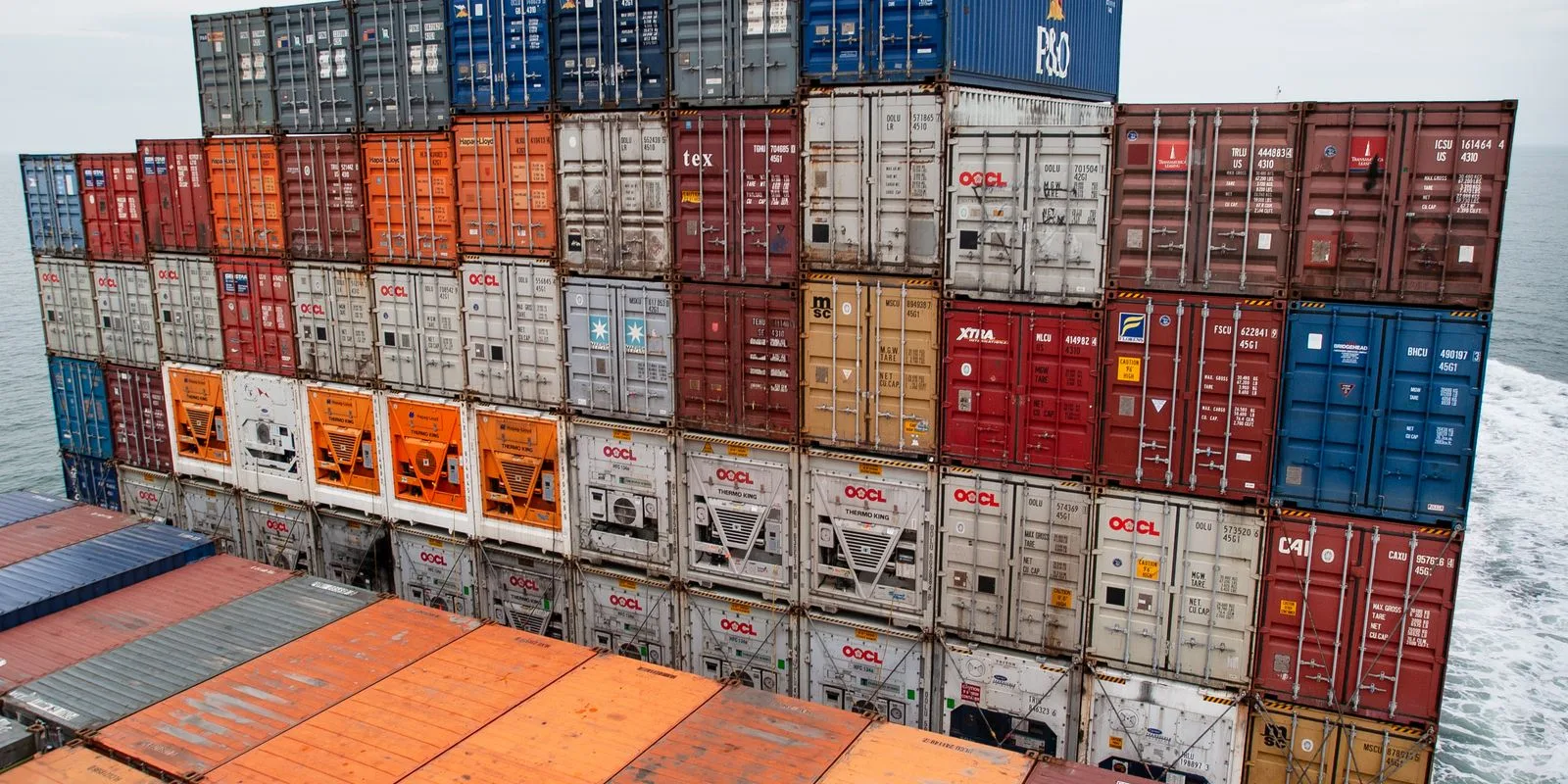
Sole use container
The whole container is yours. It is loaded with your belongings only, sealed, and travels without waiting for anyone else. Suits larger households and anyone whose date is fixed, because nothing is waiting on other consignments to fill the space.
Shared container, or groupage
Your belongings share a container with other consignments. Because the container has to be filled and then unpacked and sorted at the far end, a shared shipment structurally takes longer than a sole use one. Suits smaller volumes and flexible dates.
Air freight
The fastest option by a wide margin, and the most restrictive on volume and weight. Usually used for a small quantity of essentials rather than a household, or where somebody has to be functioning at the other end immediately.
Road freight to Europe
For European destinations, road is often the practical choice. It avoids port handling entirely, the transit is shorter than sea, and volume is less punishing than it is by air.
We will tell you which method suits your volume and your dates, including when a smaller shipment plus buying some items on arrival works out simpler than shipping everything.
Export packing and the customs inventory
Packing for an overseas move is a different job from packing for a domestic one, and the difference is not cosmetic. A domestic load is handled twice and travels for hours. An export consignment is handled repeatedly, may stand in a yard or a hold, and crosses climate zones where humidity and temperature swing considerably. Cartons are packed and sealed with that in mind, and anything vulnerable to damp or movement is protected accordingly.
The bigger difference is the inventory. Every carton is numbered and its contents itemised as it is packed, and that list travels with the shipment as the document customs reads at the destination. A vague inventory is the most common cause of a shipment being delayed or inspected, because an officer who cannot tell what is in a box has every reason to open it.
It also means you should not pack your own cartons for an international move and hand them over sealed. Anything already packed will generally need opening and listing before it can ship, which costs more time than packing it properly in the first place.
For packing that is not export packing, our packing service page covers the domestic options, materials and room by room detail.

Paperwork and customs, in plain English
This section is orientation, not advice. Customs rules differ by destination and change regularly, so nothing here should be treated as current or complete for your country. Check gov.uk for the UK side and the customs authority of your destination country for theirs, and do it close to your move rather than months ahead.
In broad terms, most destinations want to establish three things about a household shipment. What is in it, which is what the itemised inventory is for. Who you are and why you are entitled to bring it, which is usually evidenced through identification and a visa, residence permit or proof of address. And whether anything in the consignment is restricted, dutiable or prohibited where you are going.
Many countries operate some form of relief for used household effects being imported by someone taking up residence, on the general principle that your own second hand belongings are not an import in the commercial sense. The conditions attached to that relief, how long you must have owned the items, how soon after arrival you must ship, and what evidence is required, vary widely and are exactly the sort of detail that should be checked rather than assumed.
For destinations in the European Union, the position changed after Brexit. Moves from the UK to an EU country are now customs matters in a way they were not before, and older advice online frequently predates that. Treat anything undated on the subject with suspicion.

Documents that usually come up
- The itemised inventory of the shipment
- Passport and identification
- Visa, residence permit or equivalent
- Evidence of address at the destination
- Any relief or exemption declaration the country requires
Always confirm the current list for your destination with its customs authority.
What you cannot ship
These are the categories that come up on nearly every international move. They are commonly restricted rather than universally banned, and the detail differs by destination, so treat this as a prompt to check rather than a definitive list. The destination customs authority is the authority.
Aerosols and flammables
Deodorants, hairspray, lighter fuel, gas canisters and anything pressurised. Consistently prohibited in sea freight and the most common thing found in a household consignment.
Paints, solvents and chemicals
Paint tins, white spirit, thinners, adhesives, pool chemicals and garden treatments. Both a fire risk and a contamination risk in a sealed container.
Food and plants
Opened or unopened food, seeds, plants, soil and anything organic. Biosecurity is taken extremely seriously in Australia and New Zealand in particular, where soil on a garden fork can hold up a whole shipment.
Alcohol
Restricted or dutiable in many destinations rather than universally banned, and treated very differently country to country. Always check before assuming the wine collection travels.
Firearms and weapons
Firearms, ammunition and bladed items. Subject to licensing in essentially every country and never something to include without dealing with it separately.
Valuables and documents
Cash, jewellery, passports, wills and irreplaceable papers should travel with you rather than in the shipment, regardless of whether they are technically permitted.
The practical advice is to deal with these before packing day rather than on it. Aerosols and half empty paint tins found mid pack are a nuisance; a container held at the far end over a jar of honey is considerably worse.
Timings and planning ahead
International moves need substantially more lead time than domestic ones, and the reason is that several independent things have to line up rather than one crew turning up on a date. Start the conversation earlier than feels necessary. A survey costs you nothing and gives you a shape to plan around.
What usually drives the schedule
- Visa or work permit dates, which are rarely flexible
- A job start date at the other end
- Completion or lease end on the Glasgow property
- Container availability and how full a shared load is
- Clearance at the destination, which is outside anyone control
Plan around the shape, not a date
Sea freight is measured in weeks rather than days, and the longer the route the wider the range. Shared loads add waiting at both ends. Clearance adds an unpredictable tail. Anyone quoting you a guaranteed door to door date for a sea shipment is telling you something they cannot actually control.
The practical consequence is to plan for a gap. Take with you, or ship by air, whatever you genuinely cannot be without for several weeks, and treat the sea shipment as the things you can wait for.
Pets, vehicles and specialist items
Some things do not travel in a household shipment and it is better to say so plainly than to imply otherwise.
Pets
Animal relocation is a regulated specialism with its own vaccination, microchipping, documentation and quarantine requirements that differ by destination. It is handled by dedicated pet relocation companies, not by removals firms, and it needs starting early because the veterinary timelines are long.
Vehicles
Shipping a car or motorcycle is a separate process with its own documentation, duty treatment and compliance rules at the destination, and in many countries importing a vehicle is more trouble than selling here and buying there. Vehicle shipping specialists handle this.
Specialist items
Pianos, fine art, antiques, wine collections and anything of unusual value need identifying at survey stage so they can be planned for properly rather than discovered on packing day. Some will need specialist crating or handling arranged separately.
Storage before shipping or on arrival
Two situations come up often enough to plan for. The first is a gap at this end: you have to be out of the Glasgow property before the shipment departs, or before you fly. The second is a gap at the far end, where the consignment arrives before you have somewhere permanent to put it, which is common when people fly out to find housing rather than arranging it in advance.
Storage before shipping is straightforward to arrange alongside the move, and our removals and storage page covers how that works. Storage on arrival is a destination country matter and is worth raising early, because it is much easier to plan before a shipment sails than to solve once it has landed.
What to tell us when you ask
An overseas enquiry needs more detail than a domestic one, and the detail is what lets us give you a real answer rather than a range. None of it takes long to write down.
Destination city and country
Not just the country. Requirements, routes and the practicalities at the far end differ by region, and the delivery address determines the last leg.
Rough volume or property size
Number of bedrooms is a reasonable starting point. Whether you are shipping the whole house or a selection matters just as much, because most people ship considerably less than they own.
Sole use or shared, if you have a view
If your dates are tight, say so. If you are flexible and would rather wait, say that instead. It is the single biggest lever on how the move is structured.
Target dates, and what is driving them
Visa dates, a job start, a completion date or a lease ending. Tell us which of these is fixed and which has give in it.
Access at the Glasgow end
Floor level, stairs, lift and parking. A container or a large vehicle cannot always get close to a tenement, so the loading arrangement sometimes needs planning.
Anything needing storage or special handling
Whether you need storage before shipping, and whether there is anything of unusual value, size or fragility in the consignment.
If you do not know some of it yet, send what you have. Early conversations are useful even when the dates are still uncertain, and they are usually the ones that save time later.
Moving abroad from Glasgow?
Tell us the destination city, roughly what you are shipping and when you need to be there. Early conversations are worth having even when the dates are still moving.
Moving abroad checklist
A practical pre-departure timeline. The dates are a guide rather than a rule, and if your move is closer than six months, work backwards from the list rather than assuming you have missed something important.
Six months out
- Check passport expiry for everyone travelling, including renewals that take longer than expected
- Start the visa or residence permit process, since it usually gates everything else
- Get quotes and a survey so you know the volume and the shape of the schedule
- Research the destination on what can and cannot be brought in
- Decide in principle what is shipping, what is selling and what is being given away
Three months out
- Confirm the shipping method and book the move
- Request medical and dental records, and repeat prescriptions where relevant
- Contact schools for records and references if children are moving
- Tell your bank and any providers you are moving abroad, and check what accounts you can keep
- Start the serious decluttering, since everything you do not ship is volume you do not pay to move
Six weeks out
- Serve notice on utilities, broadband, council tax and any subscriptions
- Arrange a mail redirect and update addresses on anything financial
- Confirm flights and make sure they work with the packing and collection dates
- Deal with aerosols, paints, chemicals and anything else that cannot ship
- Book any pet or vehicle specialists, which need their own long lead times
Final fortnight
- Set aside everything travelling with you rather than in the shipment
- Keep passports, visas, certificates, medical records and financial documents in your hand luggage
- Take final meter readings and photograph them
- Empty, defrost and dry the freezer, and drain washing machines and dishwashers
- Confirm collection times and make sure someone will be present for the pack and the load
The single most useful habit is deciding early what travels with you rather than in the shipment. Everything you will need in the first few weeks should be in a suitcase, not in a container.

Leaving from Glasgow
The overseas part of an international move gets all the attention, but the first few hours happen in an ordinary Glasgow street, and that is where the practical problems usually are.
We collect from across the city: the West End and Partick, the Southside and Shawlands, the city centre and Merchant City, Dennistoun and the East End, and out through Bearsden, Milngavie, Newton Mearns, Cambuslang, Paisley, East Kilbride, Hamilton and Clydebank.
Access shapes the loading plan more than people expect. A large vehicle often cannot get close to a tenement close, and much of the West End, the city centre and the inner Southside is permit controlled, so a parking suspension is worth arranging rather than gambling on. City centre collections also need planning around the Low Emission Zone and enforced loading windows. Where a container cannot reasonably be brought to the door, the consignment is loaded to a vehicle and transferred, which is normal practice and simply needs allowing for in the plan.
All of it is the same tenement stairs, narrow closes and permit bays we deal with on domestic moves, which is the part of an international job that is genuinely local.
What customers say about overseas moves
“The inventory was the thing that impressed me. Every box numbered and listed, which made the paperwork at the other end far less frightening than I had expected.”
Karen D.
Move to Australia, Southside
“We were flying out before the shipment sailed, so they stored everything here first and kept us updated the whole way through. Nothing was left to us to chase.”
Stuart M.
Move to Canada, Bearsden
“Straight answers about what would and would not be worth shipping. We took far less than we planned to and were glad of it.”
Aoife G.
Move to Ireland, West End
Overseas removals questions, answered
Start the conversation as early as you can, ideally several months out. Survey and quoting are quick, but visas, decluttering and shipping arrangements are not, and an early survey gives you a shape to plan around. If your move is closer than that, call anyway and we will tell you honestly what is workable.
It depends on volume and how fixed your dates are. A sole use container travels without waiting for other consignments, so it is the more predictable option. A shared container has to be filled and then sorted at the far end, so it structurally takes longer. Larger households with firm dates usually take sole use; smaller, flexible moves often take shared.
The itemised inventory is prepared as part of the packing, and that is the central document. Beyond that, customs requirements differ by destination and change, and what we prepare directly versus what is handled by shipping partners depends on the route. Ask us about your specific destination and we will tell you exactly who does what.
Aerosols, flammables, paints, solvents, food, plants, soil and firearms are the usual categories, and alcohol is restricted or dutiable in many places. Cash, jewellery and irreplaceable documents should travel with you. Rules vary by destination, so always check with that country customs authority before assuming.
Yes. Needing to be out of a Glasgow property before the shipment departs is common, and storage at this end is arranged alongside the move through our removals and storage service. Storage on arrival is a destination country matter and is best raised early.
Yes, and it is packed to a different standard from a domestic move because the consignment is handled repeatedly and crosses climate zones. Every carton is also itemised as it is packed, because that inventory is what customs reads. Pre-packed cartons generally have to be opened and listed, so it is better to let us pack.
The consignment clears customs, then is delivered into your new property by people in the arrival country, with unpacking where that has been arranged. Clearance takes as long as it takes, which is why it is worth planning for a gap rather than a fixed arrival date.
Tell us the destination city and country, roughly what you are shipping, your target dates and the access at the Glasgow end. We will arrange a survey, since volume is what everything else follows from, and come back with a written quote setting out the method and what is included at each end.
Related services
If your move turns out to be domestic, or needs one of these alongside it, these are the pages to look at.

Whole home moves within Glasgow and across the UK, surveyed and run as one job.

Full, part or fragile only packing for domestic moves, with materials supplied.

Storage before shipping, or between properties, arranged on the same booking.

A van and one or two crew for smaller jobs and the clearing up that follows a move abroad.
Get a free international removals quote
Tell us the destination city and country, roughly what you are shipping, your target dates and the access at the Glasgow end. We will come back within one working day and arrange a survey. If you would rather talk it through first, call 0141 000 0000 or use our contact page.
Start your free quote
No obligation. No middlemen. A real quote from our own Glasgow team.