The short version
- Small boxes for heavy things, large boxes for light things. Almost every packing failure starts with getting this backwards.
- Label for the room you are going to, not the room you are in, and write on the top and one side.
- Fill every box completely. Half empty boxes collapse when they are stacked, and stacking is unavoidable.
- Pack an essentials box last, load it last, and keep it in your car rather than the van.
- Most people underestimate packing time by half. A three bedroom house is several days of real work, not an evening.
Box weight is what everyone gets wrong
The commonest packing mistake is putting heavy items in large boxes. A large carton filled with books or crockery becomes something nobody can safely lift, the base gives way at the worst moment, and the contents land on a tenement stair.
The rule is simple and consistently ignored: small boxes take heavy things, large boxes take light things. A standard book carton filled with hardbacks can pass 25kg, which is beyond what most people should be lifting repeatedly, particularly on stairs.
A practical test that works better than a number on a scale: if you cannot carry the box up one flight of stairs without setting it down, it is too heavy. Repack it. Two manageable boxes are always better than one that has to be dragged.
| Box size | Approximate capacity | What goes in it |
|---|---|---|
| Book or small carton | Around 1.5 cubic feet | Books, CDs, tools, tinned goods, anything dense |
| Standard carton | Around 3 cubic feet | Kitchen items, crockery, toys, small appliances |
| Large carton | Around 4.5 cubic feet | Bedding, cushions, lampshades, light bulky items |
| Wardrobe carton | Hanging rail included | Clothes on hangers, straight across, no folding |
| Picture or mirror carton | Flat and adjustable | Framed pictures, mirrors, glass shelving |
The other half of the weight problem is underfilling. A box that is only two thirds full crushes when something is stacked on it, and something will be stacked on it. Fill the gap with soft items, towels, tea towels or bedding rather than leaving air. The box needs to be full and flat-topped, not necessarily heavy.
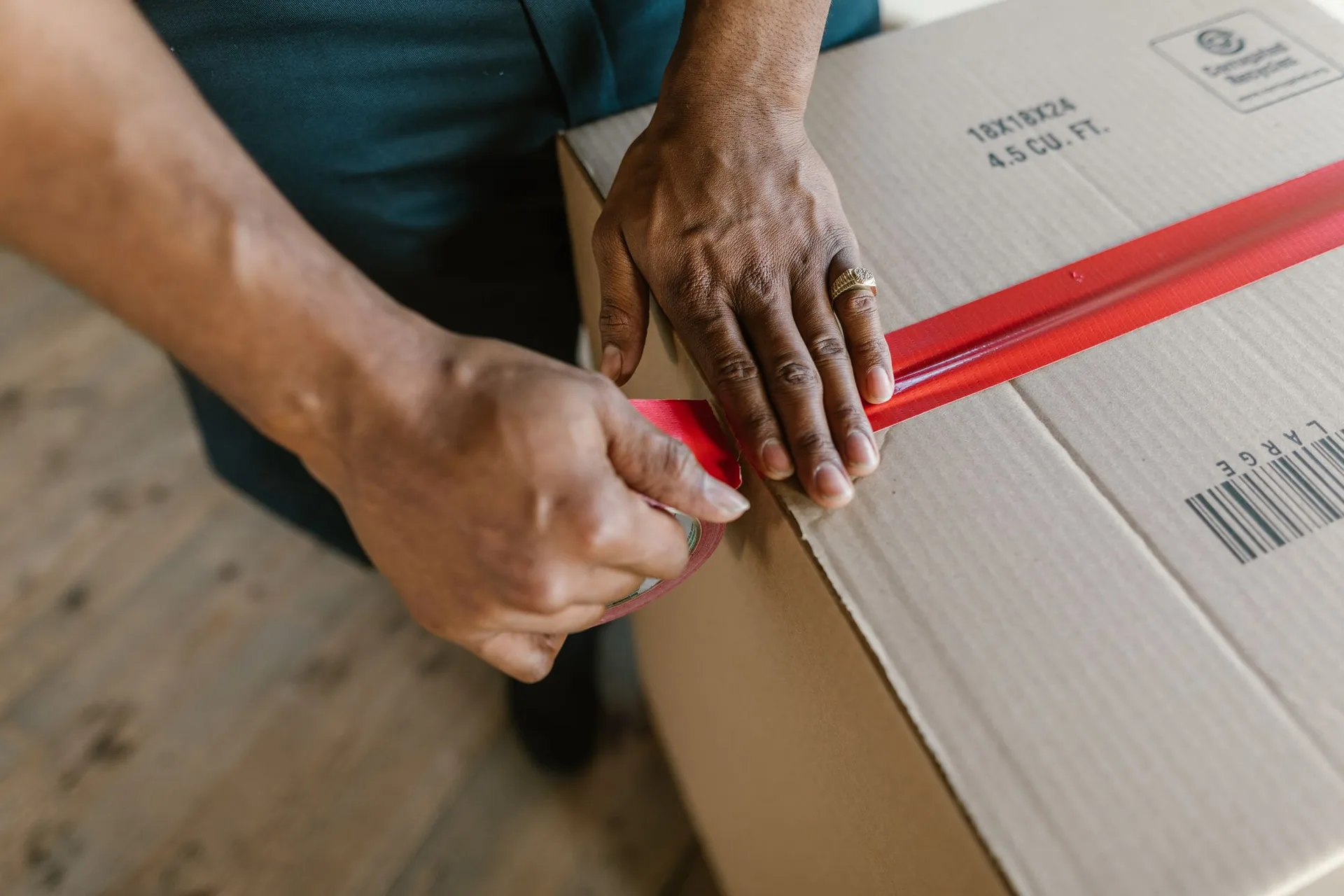
Tape the base properly. A single strip along the seam is not enough for anything that will be carried. Run tape along the central seam and then across both edges so the base cannot splay under load.
The labelling system that actually works
Label boxes for the room they are going to at the new property, not the room they came from. This sounds obvious and almost nobody does it, which is why so many people spend their first evening moving boxes between rooms they have already put them in.
The system that holds up on the day:
- Write on the top and at least one side. Boxes get stacked, and top labels disappear the moment something goes on them.
- Destination room first, contents second. “Back bedroom, bedding” rather than “bedding”.
- Add a priority marker. A simple 1, 2 or 3 for unpack first, this week, no rush. This is the single highest value ten minutes of the whole process.
- Mark fragile boxes on every side. One small word on a face that ends up against a wall helps nobody.
- Number the boxes and keep a list. Tedious, and the only way to know at the far end whether everything arrived.
If the new property has rooms that are not obvious from the outside, sketch a floor plan with your room names on it and hand it to the crew when they arrive. “Back bedroom” means nothing to somebody who has never been in the house. A plan on the wall by the door means boxes land in the right place first time.
What never goes in a box
Some things should not be packed at all, either because a removals firm cannot legally carry them, or because packing them creates a problem you will discover at the worst moment.
Do not pack, and do not put in the van:
- Anything flammable. Petrol for the mower, gas canisters, paint, white spirit, aerosols in quantity, barbecue fuel. These are prohibited on vehicles and for good reason.
- Open liquids. Cleaning products, oils, anything that can leak. If it must travel, seal it, bag it and carry it in your own car upright.
- Plants. Most firms will not take them, and a day in a dark van does them no good anyway.
- Perishable food. Empty the fridge and freezer. Defrost at least a day ahead, because a freezer that defrosts in transit leaks.
Keep with you rather than in the van:
- Passports, birth certificates, title deeds and legal documents
- Jewellery, cash and small valuables
- Medication, including anything refrigerated
- Keys, chargers, and the paperwork for the move itself
- Laptops and hard drives, particularly if the move runs over two days
The reasoning is not about trust. It is that on a busy day, in a chain of vehicles and stairs, the things you cannot replace should not be in a box that looks like every other box.
Room by room, in the order that works
Pack in order of how little you need the contents, starting with the rooms you use least. Beginning with the kitchen is the classic error, because you then live out of boxes for a fortnight.
A sequence that holds up:
- Loft, garage, shed. Weeks ahead. Nothing here is needed, and this is where the volume you forgot about lives.
- Spare rooms and storage. Books, decorations, anything seasonal.
- Living room, minus the essentials. Ornaments, books, DVDs, everything except what you sit on and watch.
- Bedrooms, minus current clothing. Out of season clothes, spare bedding, contents of drawers.
- Kitchen, minus a working minimum. Keep a kettle, a few mugs, two plates and one pan out.
- The last day. Bedding, the working kitchen minimum, toiletries, and the essentials box.
Empty drawers in tall furniture before the day. A tallboy or chest of drawers full of clothes is far heavier than it looks, the drawers slide out on stairs, and the extra weight is exactly what makes a piece difficult on a half landing turn. Wardrobes should be emptied too, ideally into wardrobe cartons so the clothes go straight back on a rail at the other end.
Take photographs of the back of your television and any other cabled equipment before you disconnect anything. Reassembling a setup from memory three days later, tired, is a job nobody enjoys.
Tell us the property size and your date and we will come back with a written quote for packing and the move.
Get a quoteThe essentials box, and why it goes in your car
Pack one box, or one bag, containing everything you need for the first evening and morning in the new property. It travels with you in your own car, not in the van, because the van may not be unloaded when you want it.
What belongs in it:
- Kettle, mugs, tea, coffee, milk and something to eat
- Toilet roll, hand soap, a towel each, basic toiletries
- Phone chargers, and a multi-way extension lead
- A torch, and a basic tool kit including a screwdriver and a knife for tape
- Cleaning cloths, bin bags and a spare roll of tape
- Medication, and anything a child or a pet needs immediately
- Bedding for the first night, if it is not going on the van in an obvious place
In Scotland this matters more than it does elsewhere, because keys typically change hands around the middle of the day once funds transfer. A move that starts early at the old property can easily still be unloading in the evening. If your essentials are in box 47 somewhere in the middle of the load, you will not see them when you want them.
Fragile items and what actually breaks
Breakages in a move cluster around a small number of predictable items, and almost all of them come down to packing rather than handling.
The repeat offenders:
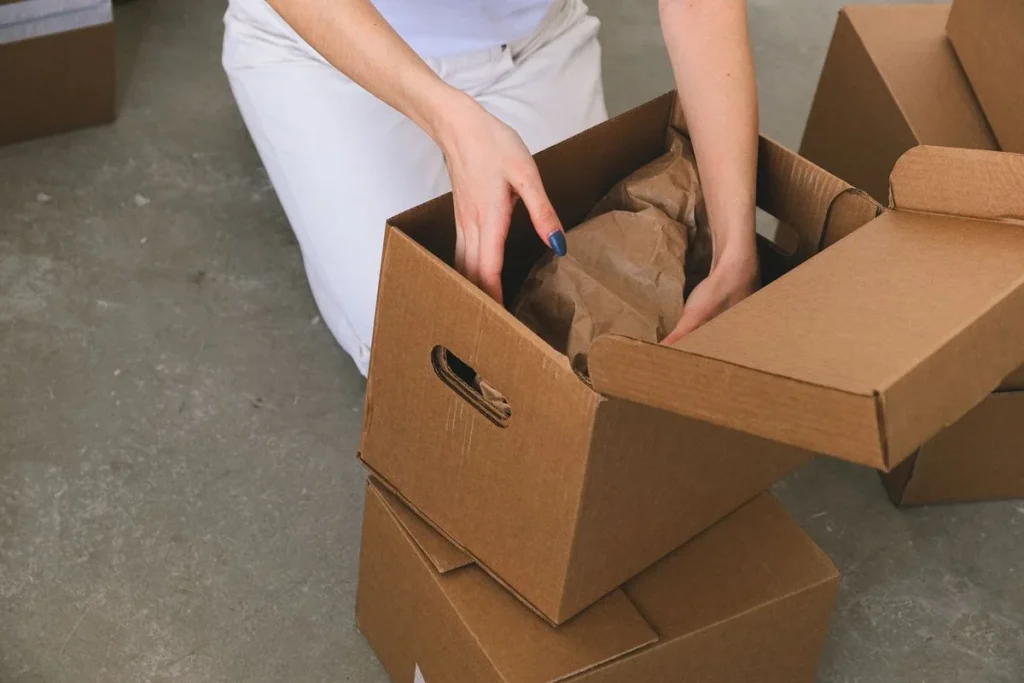
- Plates packed flat. Pack them on edge, standing vertically like records, with paper between each. Flat stacks crack under their own weight.
- Glasses packed without support. Wrap individually, stand upright, and fill the middle of each glass with paper.
- Televisions without the original box. Modern screens are structurally fragile. If the original packaging is gone, they need a purpose-made carton or crating, not a blanket.
- Mirrors and glass tops. These travel on edge, never flat, and never leaning loose against a wall where somebody will move them.
- Lamps with the shade on. Take the shade off and box it separately with light items.
- Anything marble or stone. Table tops crack across the grain if carried flat. On edge, supported, or not at all.
Paper beats bubble wrap for most crockery, because it fills space as well as cushioning. Use plain packing paper rather than newspaper on anything light coloured, since newsprint transfers. Bubble wrap earns its place on electronics, framed items and anything with a finish that can scuff.
How long packing actually takes
Almost everyone underestimates this, usually by about half. Packing is not one evening’s work for anything larger than a studio flat, and the last day is always busier than planned.
| Property | Realistic packing time, done yourself | Start from |
|---|---|---|
| Studio or one bedroom flat | One to two full days | Two weeks out |
| Two bedroom flat | Two to three full days | Three weeks out |
| Three bedroom house | Four to five full days | Four weeks out |
| Four bedrooms plus garage and loft | A week or more | Six weeks out |
Those figures assume full days, which most people do not have. Spread across evenings and weekends, a three bedroom house is genuinely a month of background effort. Starting with the loft and the garage means the difficult, high volume, low urgency work is done while you still have time.
A professional packing team works considerably faster, and a full pack for a three bedroom house is normally done the day before the move rather than on the morning of it. That is worth knowing when you plan your last week.
When packing yourself is a false economy
Packing yourself saves money and it is the right choice for plenty of moves. There are situations where it reliably is not.
Consider a packing service if:
- You are working full time in the final fortnight. The maths rarely works. Something gets done badly at midnight.
- You are moving abroad. Marine insurance policies commonly limit cover on owner-packed cartons, so self-packing can cost you the protection.
- You have a lot of genuinely fragile items. Glass, ceramics, artwork and instruments need materials and technique rather than enthusiasm.
- You are moving from or into a top floor tenement. Stairs punish bad packing much harder than a house with a driveway does.
- You are downsizing under time pressure. Sorting and packing at the same time is how boxes of things you meant to discard end up in the new house.
Equally, if you have several unpressured weeks, a modest amount of stuff and somewhere to stack finished boxes, packing yourself is entirely sensible and most people do it. A middle option exists too: fragile-only packing, where the kitchen and breakables are done professionally and you handle the rest. Our packing service page sets out how that normally works.
The last twenty four hours
The final day is where good packing either holds together or unravels, and it is almost always busier than people plan for. Treating it as its own task rather than as the tail end of packing makes a noticeable difference to how the move itself goes.
What should still be outstanding on the last evening, and nothing beyond it:
- Bedding, which comes off in the morning rather than the night before
- The working kitchen minimum, boxed last thing
- Toiletries and whatever you need overnight and first thing
- Chargers, and the essentials box, which goes in your car rather than the van
Defrost the freezer at least a full day ahead and leave the door open with a towel underneath it. A freezer that defrosts in transit leaks over everything stacked beneath it, and it is one of the more miserable discoveries at the other end of a move.
Do a final walk of every room, including the loft, the shed and the back of every cupboard. The items most often left behind are the ones that were never really in a room to begin with: things on top of wardrobes, in the airing cupboard, behind the boiler, and in a loft hatch nobody opened. Take photographs of each room as you finish it, both as a record of the condition you left it in and as a check that nothing is still sitting there.
Finally, put the kettle, two mugs and the tea somewhere you can find them in ninety seconds. It sounds trivial. On a day that starts at seven and finishes after dark, it is not.
Tell us the property size and your date and we will come back with a written quote for packing and the move.
Get a quoteCommon questions about packing for a move
How many boxes will I need?
More than you think, and the answer depends on how much you own rather than how many bedrooms you have. Books, kitchens and children’s toys drive the number up fastest. Order more than you estimate and keep the spares flat, because running out mid-pack on a Saturday evening is the classic failure point.
Should I empty drawers before the move?
Yes, for anything tall or on stairs. A full chest of drawers is much heavier than it looks, drawers slide open when the piece is tilted, and the extra weight is what makes furniture difficult on a tenement half landing. Some low, sturdy units can travel with soft contents in place, but check rather than assume.
Is bubble wrap or paper better for crockery?
Paper for most of it, because it cushions and fills space at the same time, which is what stops plates moving inside the box. Use plain packing paper rather than newspaper on light coloured items, since newsprint transfers. Keep bubble wrap for electronics, framed pieces and finished surfaces that can scuff.
When should I start packing?
Start the loft, garage and shed as soon as your date is fixed, since nothing there is needed and it is where the forgotten volume sits. Work forward through the rooms you use least. For a three bedroom house, beginning about four weeks out is realistic rather than cautious.
How do I get a price for packing and the move?
Send both addresses, the floor at each end, whether there is a lift, the property size and your date through the quote form, and say whether you want full packing, fragile only, or none. If you are still deciding when to book, our guide to when to book a removal company in Scotland explains the timing.
More guides are collected in our moving guides.