Glasgow splits into three housing types: pre-1919 tenements with no lift, converted city-centre flats, and interwar suburbs with driveways. That choice shapes daily life more than the postcode does.
Most guides to Glasgow neighbourhoods are written by people who have looked at the listings. This one is written from the other side of the front door, by people who carry furniture up the stairs. The character of an area matters, but so does whether your sofa fits round the half-landing, and almost nobody tells you that part before you sign.
The short version
- The inner city is overwhelmingly tenement: sandstone, three or four storeys, a shared close, and no lift.
- The Subway is a small circle serving the inner West End and inner Southside only. Most of Glasgow runs on rail and bus.
- Controlled parking zones cover much of the West End and city centre, so a visitor, a delivery or a removal van cannot simply stop outside.
- The Low Emission Zone applies to the city centre and to all vehicles, which matters for older cars.
- Suburbs buy you a driveway and a garden and cost you the walk to a bar, a subway station and a decent coffee.
How Glasgow’s housing actually splits
Three broad types, and knowing which one you are buying into explains more about your daily life than any list of amenities.
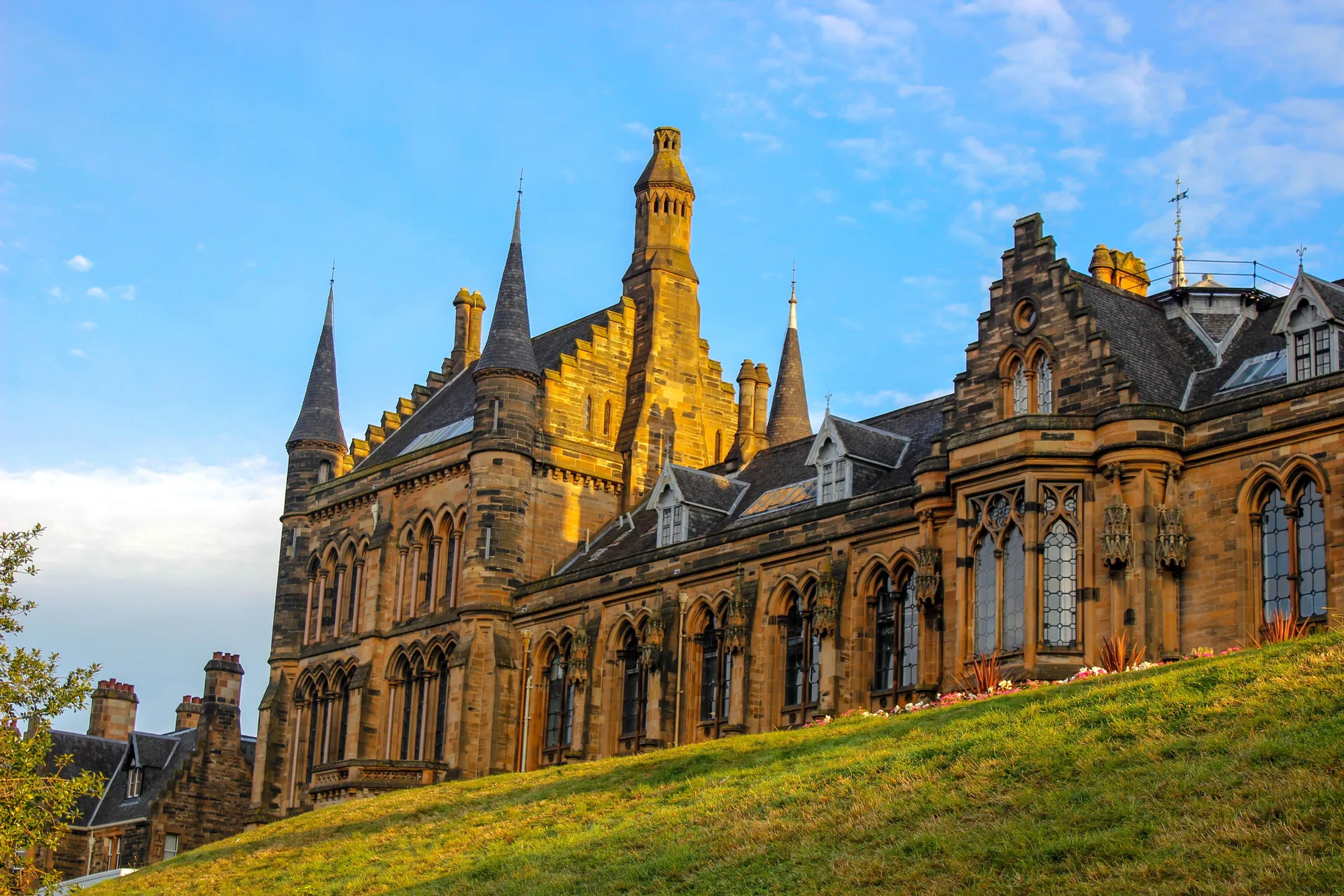
The tenement belt. Built largely before 1919 in blonde or red sandstone, three to four storeys, entered through a common close with a stair that turns back on itself at a half-landing. Rooms are generous, ceilings are high, and there is no lift. This is the West End, the inner Southside, Dennistoun and much of the inner city.
The converted and the new-built centre. Warehouse conversions in the Merchant City, newer blocks around Finnieston and the river. Lifts exist but are often a single service lift shared by the building. Parking is controlled or absent.
The interwar and post-war suburbs. Semis, detached houses and bungalows with driveways, gardens and space to park. Bearsden, Milngavie, Giffnock, Newton Mearns and the edges of the city.
| Area | Mostly | Getting to the front door |
|---|---|---|
| Hyndland, Broomhill, Partick | Pre-1919 tenement flats, some very large | Controlled parking, close stairs, no lift |
| Finnieston | Tenements plus newer blocks | Controlled parking, mixed lift access |
| Merchant City | Warehouse conversions and apartments | City centre restrictions, shared service lift, inside the LEZ |
| Shawlands, Strathbungo | Tenement flats, some terraces | Easier kerbside than the West End, still stairs |
| Pollokshields | Split: tenements east, large villas west | Villas have driveways, tenements do not |
| Dennistoun | Tenement flats | Generally workable kerbside, close stairs |
| Bearsden, Milngavie | Semis, detached, bungalows | Driveways, van to door |
| Giffnock, Newton Mearns | Semis and detached | Driveways, van to door |
| Rutherglen, Cambuslang | Mixed tenement and suburban | Varies street by street |
| Paisley, Clydebank | Mixed, own town centres | Generally straightforward |
The West End: Hyndland, Broomhill and Partick
The most consistently in-demand part of the city, and the part where the flats are biggest. Hyndland is known for unusually large tenement flats, three and four bedrooms with rooms that would embarrass a new-build, and its own station. Broomhill sits just west and is quieter, more residential, and slightly less expensive for the same square footage. Partick is the transport hub of the three, with subway, rail and bus all in one interchange, and a rougher, busier, more useful high street.
What you get: Kelvingrove Park, the university, Byres Road, and the densest concentration of independent bars and restaurants outside the centre.
What you give up: parking. Controlled parking zones cover much of it, and permits are tied to the property. If you own a car and expect to leave it outside your door, check the zone before you offer, not after.
Finnieston and the Merchant City
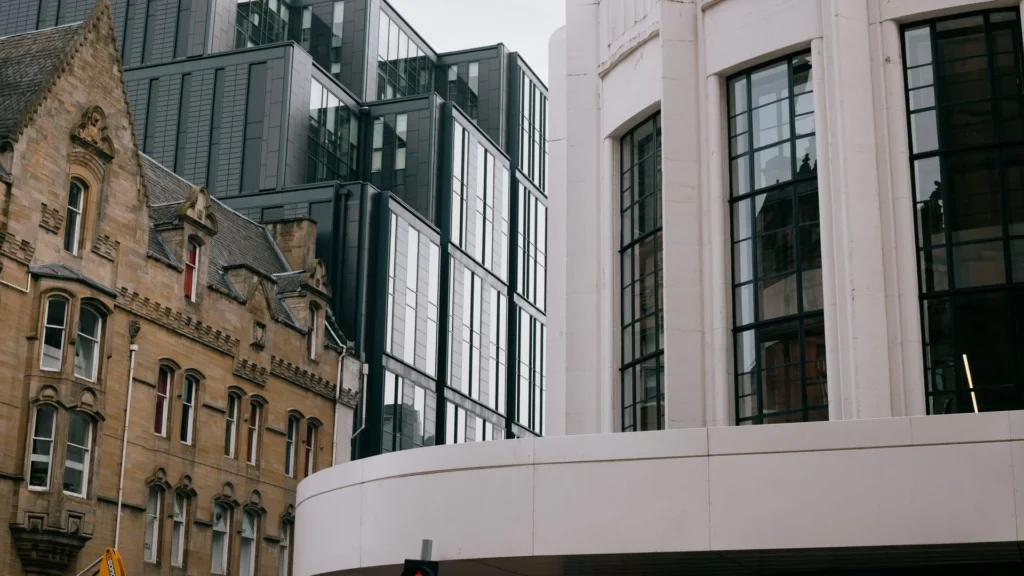
Finnieston is the strip along Argyle Street: restaurants, bars, and a walk to the SEC and the Hydro. Housing is a mix of tenement stock and newer blocks, so two flats on the same street can be completely different propositions.
The Merchant City is the converted heart of the old city: warehouse buildings turned into apartments, brick and beams, and everything within walking distance. It is the most urban way to live in Glasgow and the least practical if you own a car. It sits inside the Low Emission Zone, city centre loading restrictions apply, and most buildings share one service lift.
Both suit people who want to walk everywhere and neither suits people who want a garden.
The Southside: Shawlands, Strathbungo and Pollokshields
The Southside has become the answer for people priced out of the West End who do not want to leave the city. Shawlands is the busiest of the three, with a genuine high street, Queen’s Park on the doorstep and good rail links into Central.
Strathbungo is small, quiet and architecturally distinctive, a conservation area with terraces that look nothing like the rest of the city. It is one of the most sought-after pockets in Glasgow and very little comes up.
Pollokshields is really two places. East of the railway it is tenement flats. West of it, it is large detached villas with driveways and mature gardens, which is unusual this close to the centre. Pollok Country Park is nearby and is the largest park in the city.
Dennistoun and the East End
Dennistoun is tenement Glasgow without the West End premium: solid sandstone flats, Duke Street running through it, and a fifteen minute walk or a short bus into the centre. It has changed markedly over the last decade and is now a straightforward recommendation for anyone who wants space in a flat and does not need a G12 postcode.
The trade-off is that the amenities are thinner and more spread out than in the West End or Shawlands, and the walk home from the centre at night is longer than the map suggests.
The suburbs: Bearsden, Milngavie, Giffnock and Newton Mearns
These are the areas people move to when the flat stops working: a second child, a dog, a car that needs parking, a job that is not in the city centre.
Bearsden and Milngavie sit north west, in East Dunbartonshire. Milngavie has a compact town centre and is where the West Highland Way starts, which tells you what the surroundings are like. Giffnock and Newton Mearns sit south, in East Renfrewshire. All four have strong school reputations, which is the single biggest driver of demand and of price.
Practically, they are the easiest moves in the region. Driveways, ground-level access and space to park mean the van gets to the door, which is why a four bedroom house in Newton Mearns can be a shorter job than a two bedroom top-floor flat in Hyndland. If you are moving out of a tenement into one of these, expect to discover your furniture was chosen for a flat.
The cost is time and independence. You will drive more, your teenagers will need lifts, and a spontaneous evening in town becomes a planned one.
Beyond the boundary: Rutherglen, Cambuslang, Paisley and Clydebank
These are separate towns rather than Glasgow suburbs, with their own centres and their own councils, and they are where the value is.
Rutherglen and Cambuslang sit south east in South Lanarkshire, with fast rail into Central and a housing mix that swings between tenement and suburban within a few streets. Paisley is a proper town in Renfrewshire with its own history, its abbey, a large station at Gilmour Street and the airport nearby. Clydebank sits west on the river in West Dunbartonshire, with rail links and a shopping centre.
The thing to understand before you move to any of them is that you are changing council area, which changes your Council Tax account, your school catchments and your bin collections. The Scottish moving checklist sets out which council covers which area and what you need to tell them.
What the listings do not tell you about tenement living
Four things, none of which appear in a property advert.
The close is shared and so is the roof. A tenement is a shared building. Common repairs, from the roof down, are split between the flats, and a factoring arrangement usually handles it. Ask what the arrangement is and whether anything is outstanding.
The half-landing decides what furniture you can own. The stair turns back on itself, and anything long has to go diagonally across that turn. Wardrobes, sofa beds, mattresses and desks are where this bites. Measure the turn before you buy the sofa.
Top floor is three flights, every time. Shopping, bikes, prams, everything. It is fine at thirty and a different question at sixty.
Back courts are not gardens. Most tenements have a shared drying green. It is useful and it is not outdoor space in the way a garden is.
None of this is an argument against tenements. They are the reason Glasgow flats are as generous as they are. It is an argument for knowing what you are choosing. If you are moving into one, a house removal with a crew who know close stairs is worth more than a cheap hourly rate, and for a single item or a small flat a man with a van is usually the right shape of job.
When an area is the wrong choice
The West End is wrong for you if you need a car at the door daily. Controlled parking is not a detail you can work around.
The Merchant City is wrong for you if you want quiet. It is the middle of a city centre and behaves like one at the weekend.
A top-floor tenement is wrong for you if anyone in the household has mobility difficulties, or is likely to within the time you plan to stay. This is the single most common regret we hear.
The suburbs are wrong for you if the reason you are moving to Glasgow is the city itself. Bearsden is pleasant and it is not why anyone moves here.
And no area is right if you have chosen it from a map. Glasgow changes street by street more than most British cities. Walk it on a wet Tuesday evening, not a sunny Saturday.
Arriving in Glasgow: the first fortnight
If you are moving to the city rather than within it, a few things are worth doing early.
- Register with a GP. Practices have catchment areas and the good ones fill up.
- Set up your Council Tax with the correct authority. Greater Glasgow spans several councils and it is not always the one you expect.
- Water and sewerage charges come through the Council Tax bill in Scotland, so there is no separate account to open.
- Get a parking permit application in immediately if you are in a controlled zone. They are not instant.
- Check your vehicle against the Low Emission Zone if you will be driving into the centre.
- Learn the rail map before the subway map. The Subway is a small circle and will not get you most places.
More practical guides for the city are collected in the moving guides section.
Common questions about choosing a Glasgow neighbourhood
Which part of Glasgow is best for families?
Bearsden, Milngavie, Giffnock and Newton Mearns are the conventional answer, largely on school reputation and space. Within the city, Broomhill, Strathbungo and the western side of Pollokshields work well for families who want to stay urban.
Is the West End worth the premium?
It depends entirely on whether you will use it. If you walk to work, eat out, and use the parks and the university, yes. If you commute by car and stay in at weekends, you are paying for amenities you are not consuming, and Dennistoun or Shawlands give you a similar flat for less.
Do I need a car in Glasgow?
Not in the West End, the centre or the inner Southside. Almost certainly in the suburbs and the surrounding towns. The awkward middle is the outer city, where public transport works but not at every hour.
What should I check before offering on a tenement flat?
The factoring arrangement, any outstanding common repairs, the width of the stair at the half-landing, which floor it is on, and whether the street is in a controlled parking zone. The Home Report covers the first two. It is also worth working out the full cost of a Scottish purchase before you offer, because the tax alone is usually the largest single figure and it falls due at settlement.
How do I get a price for the move?
Send the number of bedrooms at both addresses, the floor each property is on and whether there is a lift, your date of entry, and anything unusually large or fragile. Photographs of the rooms tell us more than a written list. Send it through the quote form and you will get a written price back.
Tell us the floors, the stairs and the date and we will come back with a written quote.
Get a quote